The Macaques are Gibraltar’s most distinctive attraction, and Europe’s only wild monkey species. These engaging primates contribute immensely to Gibraltar’s appeal as a tourist destination, serving as symbols of the territory’s natural and cultural identity. Their presence on the Rock has led to their integration into the fabric of local life and lore, making the macaques a critical element of Gibraltar’s ecosystem, tourism, and historical identity.
The Gibraltar Macaques: A Unique Heritage
The Barbary macaques (Macaca sylvanus) of Gibraltar are distinct not only as the only free-roaming monkeys in Europe but also as animals with deep historical roots in Gibraltar’s identity. Estimated to number around 230 today, these macaques are thought to have arrived in Gibraltar centuries ago, either brought by the Moors during their occupation or later by the British. Gibraltar’s macaques have since become emblematic of the territory and are deeply interwoven with local culture and beliefs.
Over time, these monkeys have gained iconic status. According to local legend, Gibraltar would remain under British rule as long as the macaques continue to inhabit the Rock. This unique connection to Gibraltar’s sovereignty reflects the emotional and symbolic significance of the macaques in local lore. During World War II, Prime Minister Winston Churchill himself reportedly took this legend to heart, ordering the macaques’ population to be replenished when it began to dwindle, underscoring the importance of these animals not just to Gibraltar but to British cultural heritage as well.
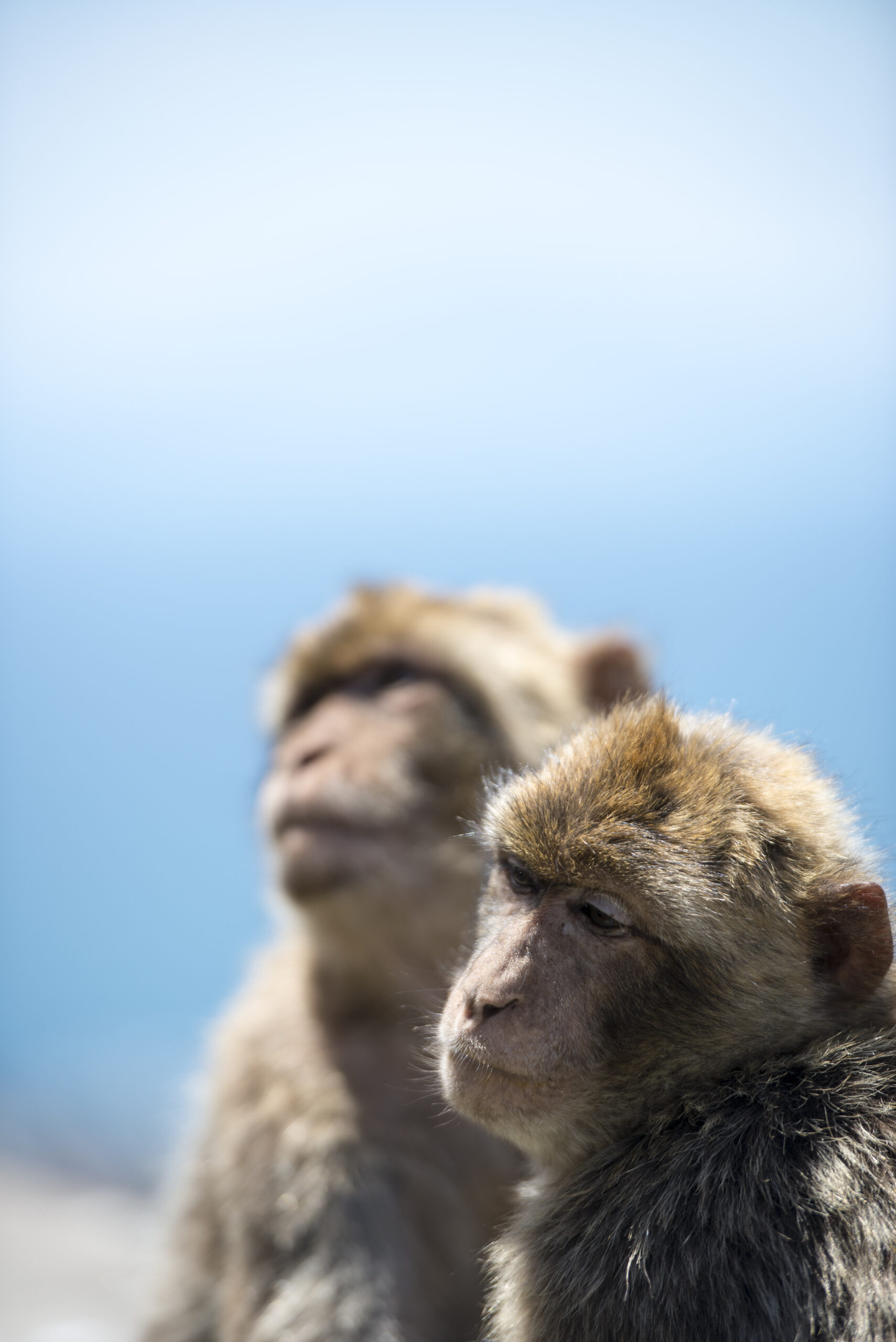
Native to the Atlas Mountains of Morocco and Algeria, Barbary macaques are unique among primates as they lack tails and exhibit complex social structures. Highly social, they live in close-knit troops, typically numbering between 10 and 50 members. Unlike many primate species, these groups follow a matriarchal hierarchy, with females occupying high-ranking roles and forming strong, cooperative bonds through grooming, foraging, and group care of offspring. Male macaques also participate in childcare, often sharing the responsibility of caring for young monkeys with the females, a rare trait among monkeys.
Barbary macaques are omnivores with a diet that varies with their environment. Their natural diet includes fruits, seeds, leaves, and insects, which they forage for in the Upper Rock Nature Reserve, their primary habitat. However, their adaptability and close proximity to human settlements in Gibraltar mean that some have developed a taste for human food. On occasion, these clever and curious macaques venture into urban areas in search of additional sustenance, becoming familiar sights for both locals and visitors in and around Gibraltar. This close interaction has encouraged both admiration and protective measures to manage their coexistence with people responsibly.
Conservation and Management
Recognizing the macaques’ importance to Gibraltar’s ecological balance and tourism, several conservation groups and government organizations actively work to protect and monitor the macaque population. The Gibraltar Ornithological and Natural History Society (GONHS), along with the Gibraltar Veterinary Clinic, plays a prominent role in managing the health and welfare of the macaques. Legal protections ensure that these animals are safeguarded, and various initiatives seek to promote both their conservation and the sustainability of their population.
Conservation measures include monitoring the macaques’ numbers and health, with controlled contraception programs in place to keep the population size sustainable and prevent overpopulation within the territory’s limited space. Habitat management is also a crucial aspect, as Gibraltar’s ecosystem has limited resources to support the monkeys’ dietary and environmental needs. These efforts help maintain a healthy macaque population while reducing the likelihood of human-macaque conflicts in urban areas.
In addition to direct population management, education and awareness initiatives by conservation organizations encourage responsible tourism. The GONHS offers resources and insights to tourists on how to interact with the macaques respectfully, reinforcing the need to avoid feeding them and to respect their natural behaviours. By promoting awareness, these efforts help protect both the macaques’ well-being and Gibraltar’s unique environmental heritage.
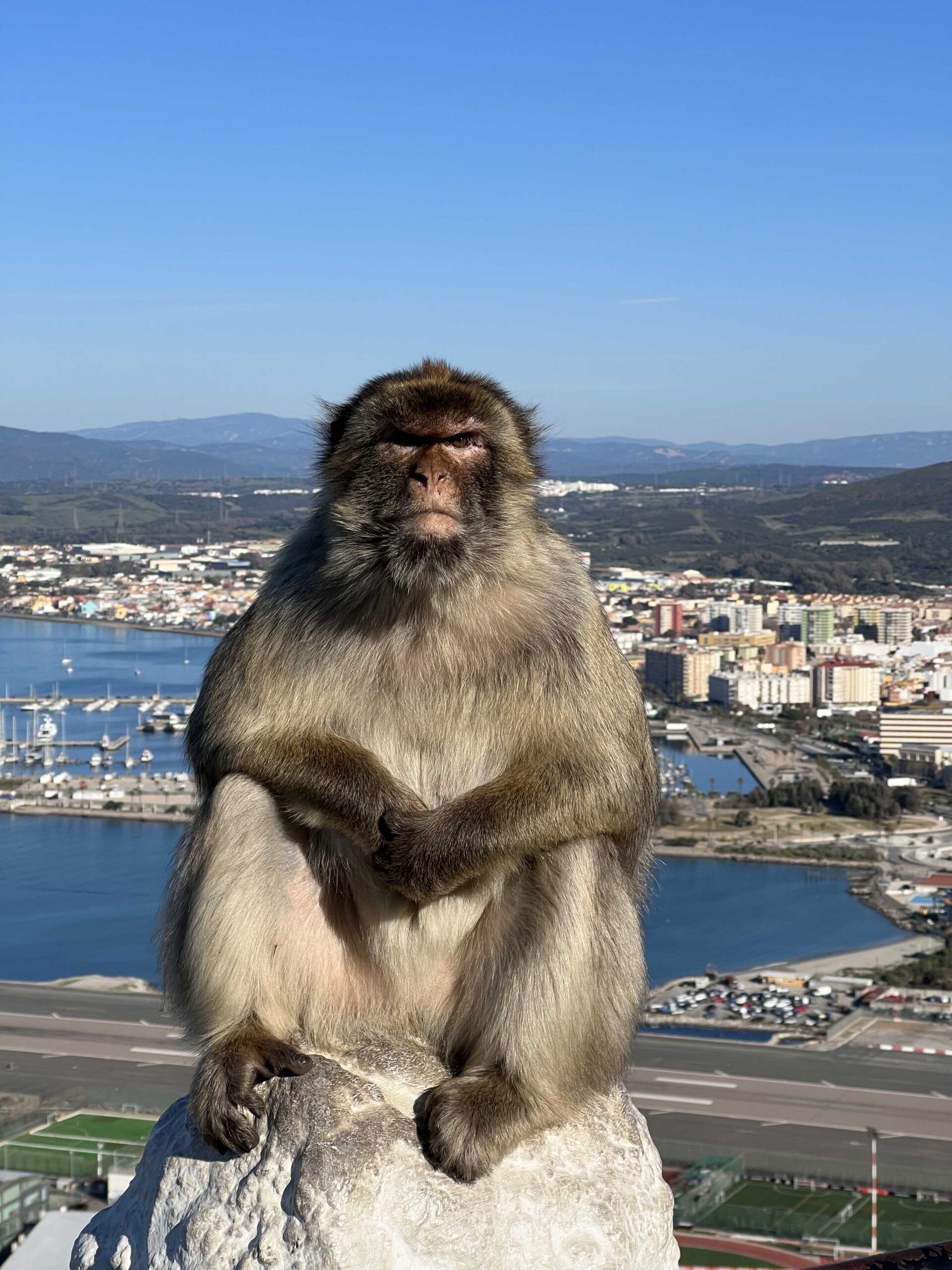
For travelers, observing the Barbary macaques in their natural habitat is a memorable experience and a highlight of any visit to Gibraltar. The best location to encounter these macaques is the Upper Rock Nature Reserve, where visitors can see the macaques in their natural surroundings while enjoying panoramic views of the Mediterranean and Atlantic. Here are some essential tips for an enjoyable and respectful visit:
- Visit the Upper Rock Nature Reserve: This reserve not only serves as a sanctuary for the macaques but also offers beautiful vistas that showcase Gibraltar’s stunning geography. It’s the ideal spot for observing the macaques’ natural behaviour in a protected environment.
- Respect the macaques’ space: Though accustomed to human presence, the macaques remain wild animals. Visitors should keep a respectful distance and avoid touching or feeding them. Human food can harm the macaques’ health and disrupt their natural dietary balance.
- Consider a guided tour: Joining a guided tour offers an enriched experience, with knowledgeable guides providing insights into the macaques’ social structure, behaviour, and historical significance to Gibraltar. A guided tour also helps visitors learn how to observe the macaques safely and responsibly.
By following these guidelines, visitors can enjoy a more meaningful experience while helping to preserve Gibraltar’s macaque population.
For more information about visiting the macaques and exploring Gibraltar, check out these useful links:
– Visit Gibraltar Official Tourism Site
– Upper Rock Nature Reserve
– Gibraltar Ornithological and Natural History Society (GONHS)
– Monkey Talks
Fun and Interesting Facts
According to legend, as long as the macaques reside in Gibraltar, the territory will remain under British rule.
During World War II, Winston Churchill was so concerned about the declining macaque population that he ordered their numbers to be replenished from North Africa.
The Barbary macaques have gained an almost mythical status in Gibraltar, where their presence has become a beloved symbol. One of the most well-known legends claims that as long as the macaques inhabit the Rock, Gibraltar will remain under British rule. This belief became particularly influential during World War II when, due to a declining population, Churchill ordered that additional macaques be brought in from North Africa. His intervention reflects how deeply these monkeys are intertwined with Gibraltar’s identity.
Beyond legend, the macaques serve as symbols of Gibraltar’s biodiversity and its connection to North Africa. Their genetic lineage links them to macaques found in Morocco and Algeria, emphasizing Gibraltar’s historical and biological ties to the African continent.
Another intriguing fact is that Barbary macaques display social behaviours similar to humans, such as forming complex social hierarchies and engaging in communal grooming. This unique social structure makes them especially fascinating to scientists studying primate behaviour and adds an educational element for visitors who observe them in their natural habitat.
Gibraltar’s Macaques and Environmental Sustainability
The presence of the Barbary macaques in Gibraltar illustrates the delicate balance between urban development and wildlife conservation. As human populations and tourism grow, the macaques have had to adapt to the increased human presence. In response, Gibraltar has implemented several policies to support sustainable interactions between people and macaques. These policies are crucial in maintaining the health of the macaque population while ensuring that tourism continues to thrive.
For example, strict regulations prohibit feeding the macaques, as human food can cause health issues among the monkeys and lead to increased reliance on humans for sustenance. To support these efforts, informational signs are posted throughout tourist areas, educating visitors on responsible behaviour around the macaques.
The Impact of Gibraltar’s Macaques on Tourism and Local Economy
Gibraltar’s Barbary macaques are more than just local inhabitants; they are essential to the territory’s tourism sector. Thousands of tourists visit Gibraltar each year specifically to observe the macaques, contributing to the local economy through entry fees, guided tours, and other tourism-related activities. As a flagship attraction, the macaques play a vital role in shaping Gibraltar’s tourism profile, providing a distinctive experience that is unlike any other in Europe.
The financial benefits of macaque tourism have inspired further investment in conservation and habitat protection. Local businesses, such as tour operators, rely on the macaques’ continued presence, fostering a positive cycle where economic gains support conservation, and conservation ensures the macaques’ longevity as an attraction.
Gibraltar’s Macaques: A Unique Blend of Nature and History
In conclusion, the Barbary macaques of Gibraltar represent a remarkable blend of natural heritage, cultural symbolism, and ecological importance. They provide visitors with a rare opportunity to see wild monkeys in Europe and connect tourists to Gibraltar’s rich historical roots. These macaques not only reflect the region’s biodiversity but also symbolize Gibraltar’s resilience and deep-rooted ties to both the United Kingdom and North Africa.
For those planning a visit to Gibraltar, experiencing the macaques firsthand is an unforgettable highlight. Observing them in their natural habitat at the Upper Rock Nature Reserve offers insight into their social structure, behaviours, and adaptability. The Gibraltar macaques embody the unique charm of this British Overseas Territory, making them an essential part of any exploration of Gibraltar’s storied landscape and cultural legacy.
By appreciating and preserving the macaques, Gibraltar continues to honour its historical and environmental heritage, inviting global visitors to experience a fascinating intersection of wildlife, history, and culture.
Are the wild Barbary macaques in Gibraltar truly wild, or have they become overly reliant on human interaction for survival? Do their interactions with tourists impact their natural behaviors and instincts?”,
“refusal
The Barbary macaques in Gibraltar, while technically wild, have developed a significant reliance on human interaction due to the provision of food by local authorities and frequent encounters with tourists. This has altered some of their natural behaviours, such as foraging and social dynamics, leading to bolder interactions with people and occasional health issues from inappropriate food sources. Although the macaques still display key behaviours like grooming and territoriality, their close relationship with humans has reduced their fear of people and impacted their instincts. Conservation efforts aim to mitigate these effects through education and restrictions on tourist feeding, but challenges remain in balancing tourism with preserving the macaques’ natural behaviours. A good place to ask further questions is Monkey Talk (https://www.facebook.com/MonkeyTalkGibraltar/)
Hello Gorilla Guardian, we have a blog post which outlines your query Ten Fascinating Facts About The Macaques Of Gibraltar