Gibraltar’s Great Sand Dune, a striking natural feature on the eastern face of the Rock, has undergone a remarkable transformation over the years. Originally a vast natural sand formation, it became an essential component of Gibraltar’s water supply system before being restored to its natural state. Today, the area has been rewilded, supporting native flora and fauna. Let’s explore the fascinating journey of the Great Sand Dune, from its role as a water catchment to its resurgence as a thriving ecological habitat.
The Natural Formation of the Great Sand Dune
Gibraltar’s Great Sand Dune, also known as the East Side Sand Slopes, is an ancient, consolidated sand dune that stretches across the eastern cliffs of the Rock. This dune is one of the largest fossilised sand dunes in Europe, formed over thousands of years by wind-driven sand deposits. The unique geological formation gave the dune a smooth, sloping surface, making it a striking feature of Gibraltar’s landscape.
Historically, the dune was a prominent natural landmark, standing as a testament to Gibraltar’s dynamic geological past. However, the growing human population on the Rock saw an opportunity to use the area for an essential purpose—water collection.
The Development of Water Catchments on the Great Sand Dune
In the late 19th and early 20th centuries, Gibraltar faced increasing challenges in securing fresh water. The small territory had no natural rivers or lakes, and its underground water reserves were limited. With the rising demand for potable water, particularly for the military and civilian populations, Gibraltar sought innovative ways to capture and store rainwater.
The Birth of the Water Catchment System
By the early 1900s, engineers devised a large-scale water catchment system on the Great Sand Dune. The construction began in 1903, covering approximately 10 acres. Over the next few decades, the catchment expanded, reaching its peak of 34 acres by 1961.
The water catchment system comprised corrugated iron sheets laid across the sand slopes. Rainwater hit these sheets, flowing into a series of channels, and directed into large underground reservoirs carved into the Rock. This method significantly increased Gibraltar’s water supply, reducing reliance on expensive and inconsistent imports.
The Great Sand Dune’s catchment system remained in use for nearly a century, providing a critical water source to the people of Gibraltar. However, as technology advanced, new methods of obtaining freshwater emerged, leading to the eventual decline of the catchment system.
The Shift to Desalination and the Decommissioning of the Catchment System
By the late 20th century, desalination technology had become a viable alternative to rainwater collection. Gibraltar, surrounded by seawater, adopted desalination plants as a more efficient and reliable means of producing drinking water. As a result, the water catchment system on the Great Sand Dune became obsolete.
In 1991, the government decided to dismantle the corrugated iron sheets and restore the dune to its natural state. The project was carried out in phases, ensuring minimal disruption to the environment. By 2006, the dune had been fully restored, marking the beginning of its rewilding process.
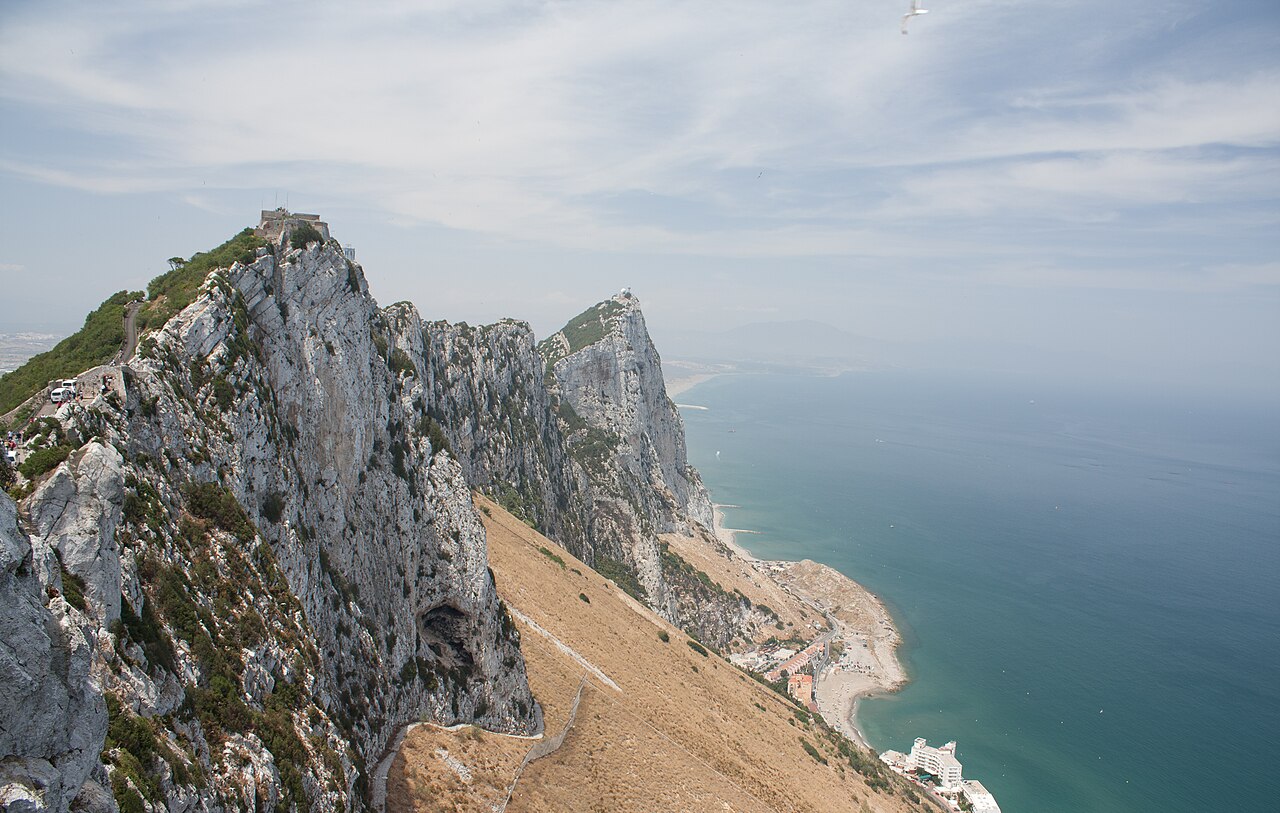
The removal of the artificial structures allowed the sand slopes to regenerate naturally. However, due to the long-term ecological impact of the catchment system, additional intervention was necessary to fully restore the area’s biodiversity.
The Rewilding of the Great Sand Dune: A Success Story
The rewilding of Gibraltar’s Great Sand Dune was not simply a matter of removing the water catchment structures—it required careful ecological management to bring back native plants and wildlife. Organisations such as the Gibraltar Ornithological & Natural History Society (GONHS) played a significant role in rehabilitating the area.
The Return of Native Vegetation
For nearly a century, the corrugated sheets prevented plants from growing on the sand slopes. Once they removed them, conservationists facilitated the natural regrowth of vegetation. Native plant species such as the Gibraltar candytuft (Iberis gibraltarica), Mediterranean saltbush (Atriplex halimus), and wild thyme (Thymus capitatus) were gradually reintroduced. These plants helped stabilise the sand and created a suitable environment for returning wildlife.
Wildlife Thrives Once Again
With vegetation restored, native and migratory wildlife began to return to the Great Sand Dune. The area now supports a range of bird species, including the Barbary partridge (Alectoris barbara), a species of conservation interest in Gibraltar. The ocellated lizard (Timon lepidus), one of Europe’s largest lizards, also re-established itself in the area.
In addition to local wildlife, the dune serves as an important stopover point for migratory birds traveling between Europe and Africa. Raptors such as peregrine falcons and Eurasian sparrowhawks often soar above the slopes, taking advantage of the restored ecosystem.
The Great Sand Dune Today: Conservation and Sustainability
Today, the Great Sand Dune is part of the Gibraltar Nature Reserve, a protected area covering over 40% of Gibraltar’s landmass. Conservation efforts continue to ensure the sustainability of this unique ecosystem.
Ongoing Conservation Efforts
- Habitat Management: Conservationists monitor plant growth and ensure invasive species do not overtake native vegetation.
- Wildlife Monitoring: Surveys track the health and diversity of animal populations living in the dune area.
- Public Awareness and Education: The site is now a valuable educational resource, showcasing Gibraltar’s commitment to environmental restoration and sustainability.
Ecotourism and Visitor Experience
While the dune itself is a protected area, visitors to Gibraltar can experience its beauty from nearby locations such as Sandy Bay. This picturesque beach, located at the base of the dune, offers a glimpse into Gibraltar’s natural coastal environment. Ecotourism initiatives encourage visitors to appreciate the Rock’s biodiversity while ensuring minimal human impact on its delicate ecosystems.
The Legacy of the Great Sand Dune’s Transformation
The transformation of Gibraltar’s Great Sand Dune is a testament to the evolving relationship between humans and the environment. What was once a practical water collection site has now become a flourishing natural habitat, demonstrating the power of ecological restoration.
Key Takeaways:
- The Great Sand Dune has a rich geological history, formed by wind-driven sand deposits over thousands of years.
- The dune transformed into a massive water catchment system, supplying Gibraltar with fresh water for nearly a century.
- Desalination technology replaced the need for the catchment system, leading to its decommissioning in the 1990s.
- Conservation efforts successfully restored the dune, allowing native vegetation and wildlife to thrive once again.
- Today, the dune is part of Gibraltar’s Nature Reserve, contributing to biodiversity and sustainable ecotourism.
As Gibraltar continues to balance urban development with environmental preservation, the Great Sand Dune stands as a symbol of successful rewilding and a commitment to sustainability. It shows how reversing past human interventions can restore the natural world.
A Rich Natural History
For nature lovers, history buffs, and conservationists, the Great Sand Dune’s story is one of resilience and renewal. Whether you’re exploring Gibraltar’s reserves or relaxing at Sandy Bay, take a moment to appreciate its remarkable transformation. Over time, it has evolved from water catchments to a thriving wildlife habitat, showing the power of conservation efforts.